Greene's literary framework · independent paraphrase
The idea in plain English
Greene's Dandy unsettles familiar categories through a self-fashioned presence. Clothing, manners and movement can suggest a freedom from the role the surrounding world expects a person to perform.
Documented comparison · selected by our editors
A presentation that refuses the first category
Man Ray's photograph presents Marcel Duchamp as Rrose Sélavy. The Philadelphia Museum of Art identifies an alter ego and a collaboration that challenges gender conventions. Clothing, name and the act of looking at the camera work together to make a deliberately constructed presentation.
I place this portrait near the Dandy because it unsettles the viewer's expected category through authored style. That is a reading of an artwork, not a claim that gender nonconformity predicts seduction. The image supplies evidence of artistic choices; it cannot identify the sitter's complete identity, sexuality or private intentions.
Evidence: Marcel Duchamp as Rrose Sélavy, c. 1920–1921. Source locators and limits are below.
Editorial judgment
What I notice in this encounter
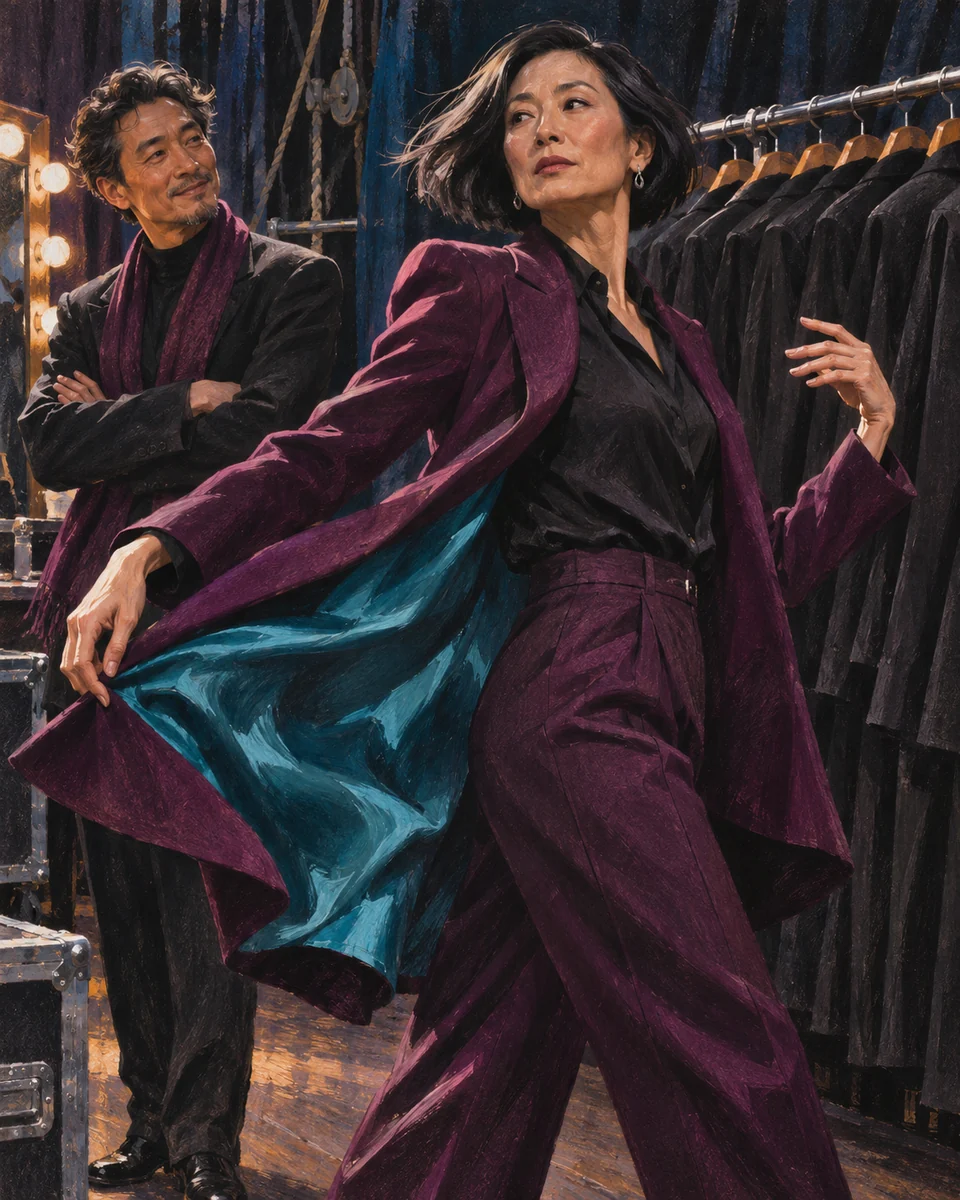
I read the jacket's turn as a change in the room's available categories, rather than evidence that the guest is trying to become famous. The Dandy's particular effect is the difficulty of fitting a visible person into a settled social script.
That can be serious self-expression as well as theatrical play. The observer is not entitled to decide that an unfamiliar style must conceal a strategy. The person wearing the jacket may simply be dressed as they wish, with attraction only one of many possible responses around them.
Modern illustration · invented adult scenario
A possible scene today
At an awards dinner, an adult combines a formal suit with a handmade embroidered waistcoat that the dress code never anticipated. Another guest asks about the maker and discovers a family craft tradition behind the apparent extravagance.
The unexpected combination opens a conversation, but its meaning becomes more particular when its wearer explains it. An observer's first impression of rebellion was incomplete.
Where the label can mislead
Greene's account often works through historically binary ideas of masculine and feminine presentation. Those conventions belong to the analysis; they do not define the range of actual identities.
Gender expression is not a device from which an observer can infer romantic motives or availability. The person's account of their presentation matters.
Sources and edition
The historical comparisons are selected for this publication. They establish particular acts, objects or accounts; the role assigned to a comparison remains an editorial interpretation.
- Marcel Duchamp as Rrose Sélavy, c. 1920–1921
Man Ray; collection interpretation by Philadelphia Museum of Art · c. 1920–1921
Locate: Object description: feminine alter ego, clothing, name wordplay and collaboration challenging gender conventions
Supports: The photograph presents Duchamp as Rrose Sélavy; the museum describes a collaboration with Man Ray that challenges gender conventions.
Scope: An artistic presentation is not a diagnosis of gender identity, a claim about sexuality or evidence that gender nonconformity predicts a seductive intention.
- The Art of Seduction — publisher record and readable contents
Robert Greene; publisher record by Penguin Books · 2003-10-07 paperback edition
Locate: Publication details; Table of Contents, Part One: The Seductive Character, nine headings before The Anti-Seducer
Supports: The nine seductive-character headings occur in the order Siren, Rake, Ideal Lover, Dandy, Natural, Coquette, Charmer, Charismatic and Star. The Anti-Seducer is separate.
Scope: The contents verify names, order and the publisher's brief propositions. They do not verify the independent historical cases or imply scientific personality categories.
- The Art of Seduction ? Penguin Books, 2003
Robert Greene; produced by Joost Elffers · 2003 paperback; first published 2001
Locate: Copyright page: PDF index 5. The Seducer's Victims—The Eighteen Types: chapter opening printed p.147; Victim Theory p.149; eighteen headings and discussion pp.150–160, PDF indices 177–187.
Supports: The nine seductive characters and eighteen receiving-side headings are separate sets, in book order. The Reformed Rake or Siren is one combined heading. The Anti-Seducer is outside both sets.
Scope: This is a literary taxonomy. Documentary comparisons in the atlas are selected by our editors, not claims that the people permanently belong to a type.