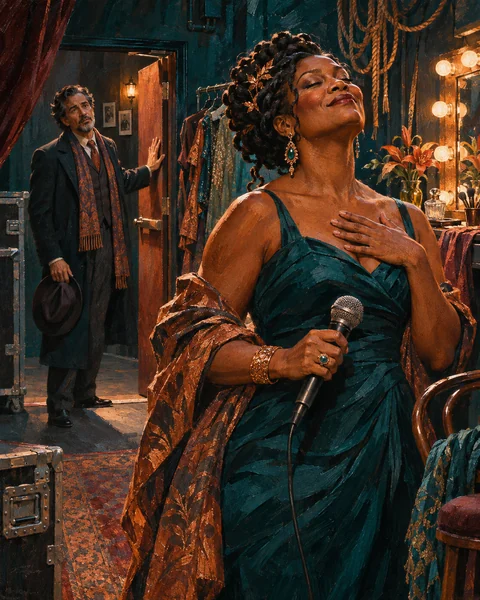
The Siren
The song is over. Someone who was leaving still has a hand on the door.
An independent reading of Robert Greene
Meet the characters in Robert Greene's The Art of Seduction. Explore their stories, compare similar types, and see where the distinctions hold.
27 profiles
Greene's nine seductive characters describe different ways a presence, an approach or an imagined possibility can hold attention.
The song is over. Someone who was leaving still has a hand on the door.
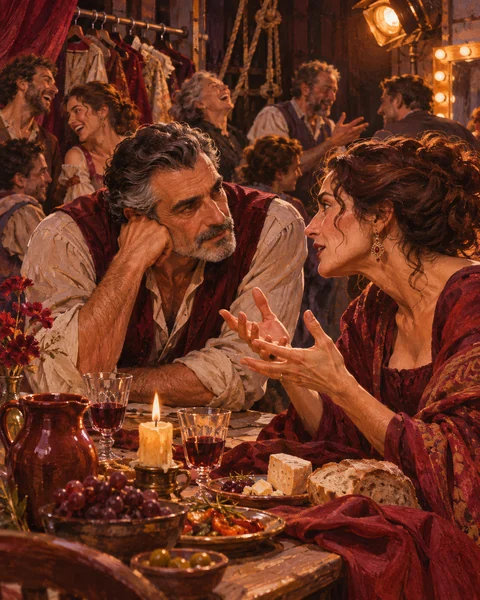
The table is crowded, but their attention makes it feel like a conversation for two.
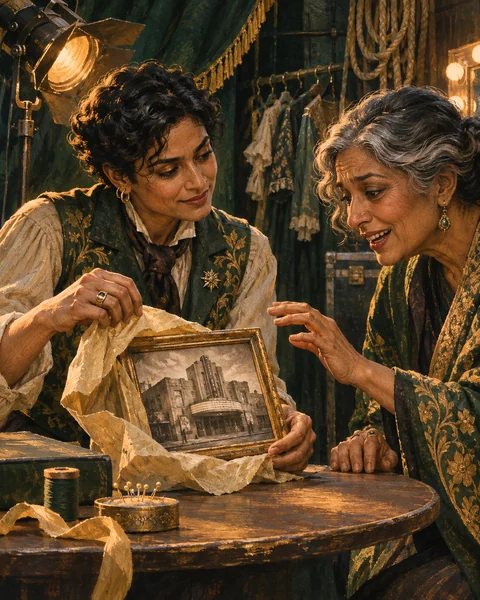
You mentioned the old cinema once. They remembered which one.

Among a wall of identical coats, the turn of one jacket changes the room.
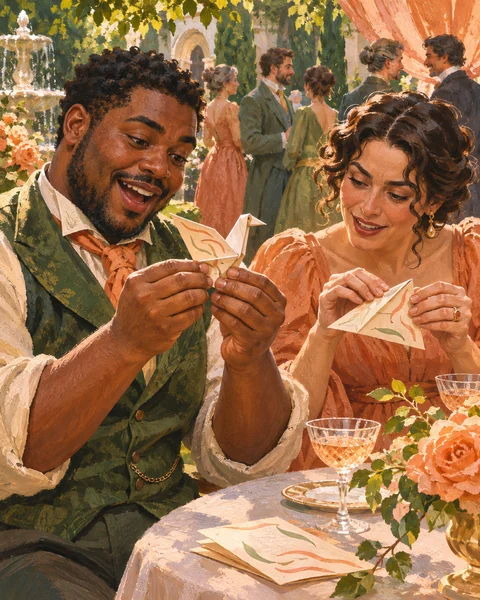
The menu has become a paper bird. Someone else is trying the fold.
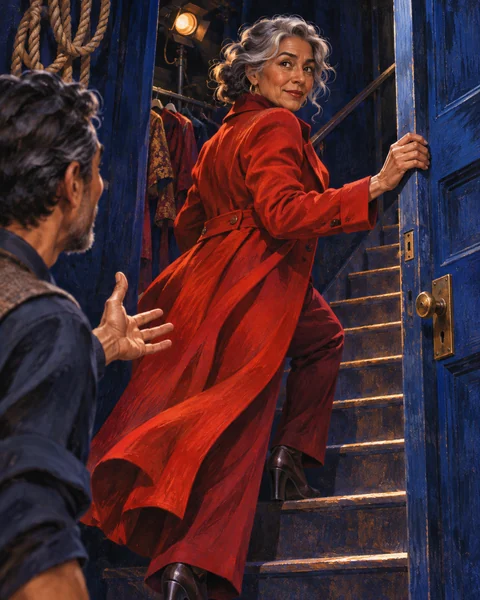
The invitation is clear. Whether it still stands tomorrow is harder to tell.

When the room talks over you, they bring the conversation back.
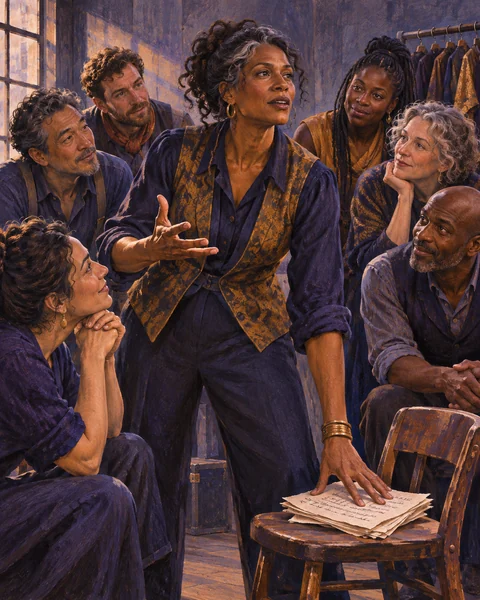
They put the notes down, and the scattered room begins to gather.

One passing figure leaves several people with different pictures in mind.
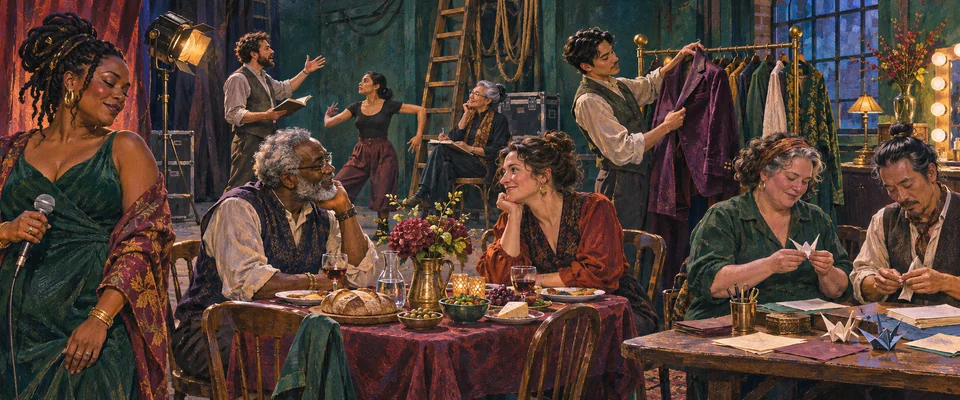
Greene calls these eighteen roles “victims”; they describe the hopes and interpretations his framework assigns to the person receiving attention.
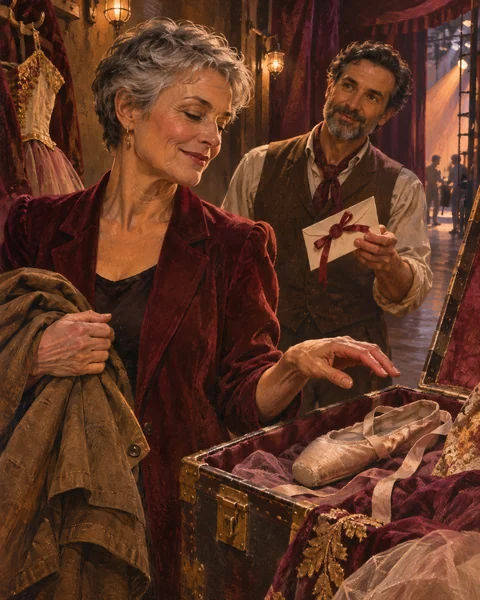
An old invitation arrives beside a life they have deliberately made quieter.

They keep the itinerary from the journey that ordinary life postponed.
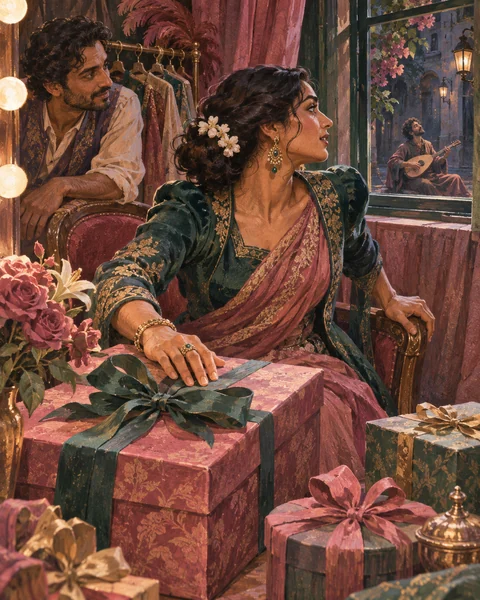
The largest gift stays closed. An unfamiliar tune draws them to the window.
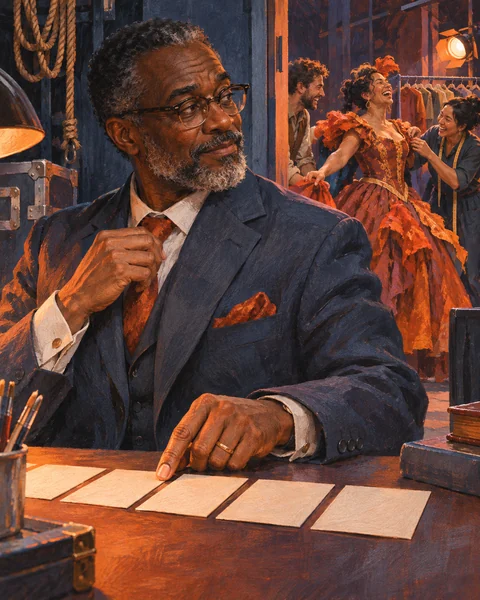
Before accepting the invitation, they consider the account they would have to give of it.

They know what it is to hold a room, even when the room has stopped looking.

The unfamiliar instrument is interesting enough to risk an awkward first note.

Once the difficult route is finished, their attention moves to the next climb.
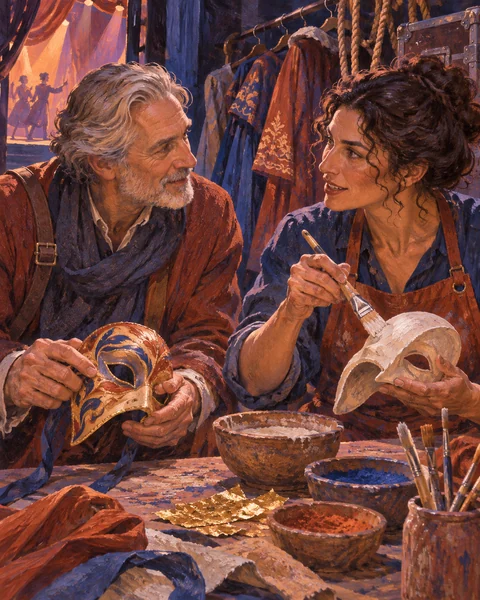
A place they have imagined arrives before the person who actually lives there.
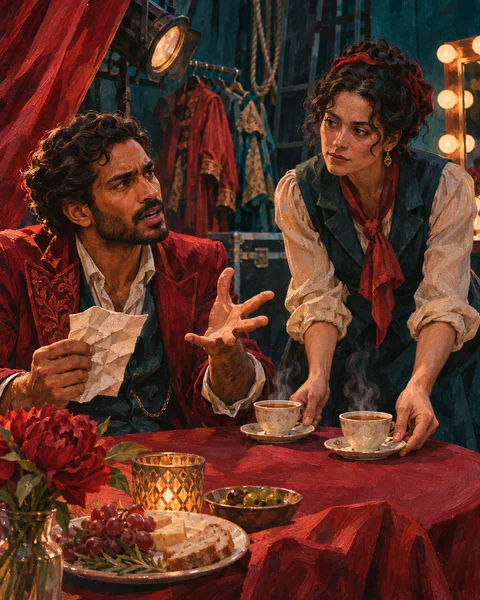
A peaceful evening can feel uneventful beside the story they expected to be living.

They can explain the room's atmosphere more easily than say what they want from it.
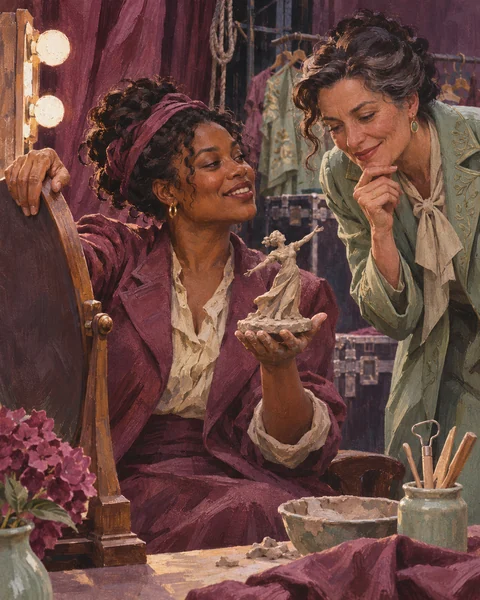
Everyone has noticed the face. They are waiting to see who notices the sentence.
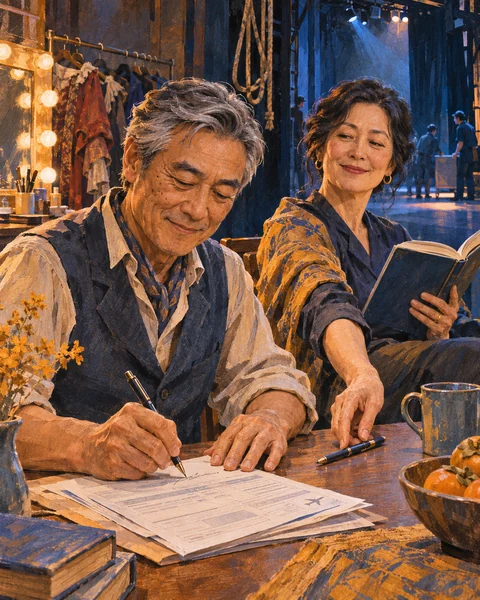
They hand over the difficult arrangement, then wonder who now gets to decide.
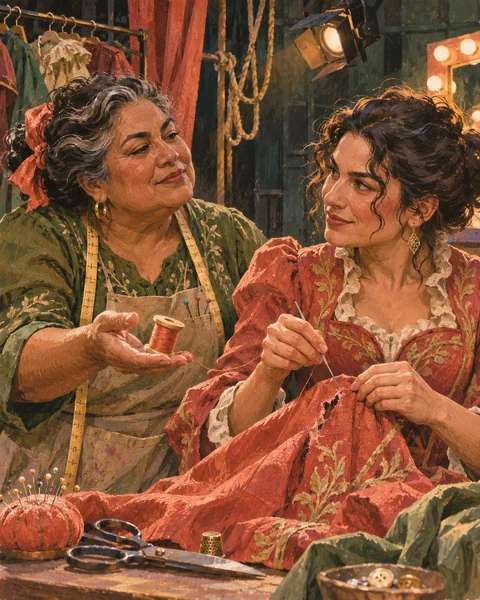
The conversation becomes a plan for helping before anyone has asked them to take charge.

They have heard the polished story before; an unpracticed answer makes them listen.

The admired figure steps off the stage, and a private question becomes possible.
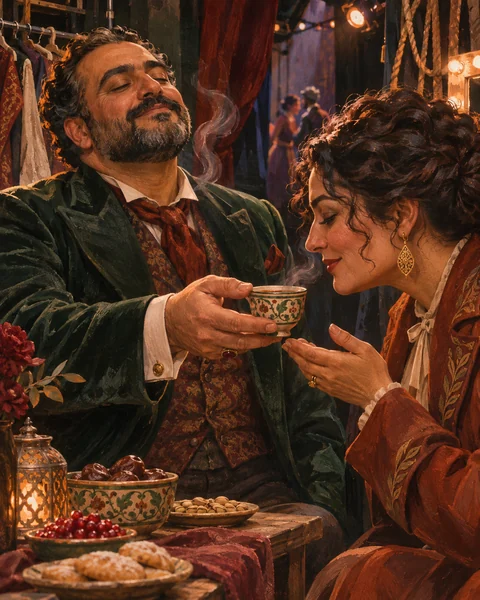
They choose the chair for its light before anyone has described the view.
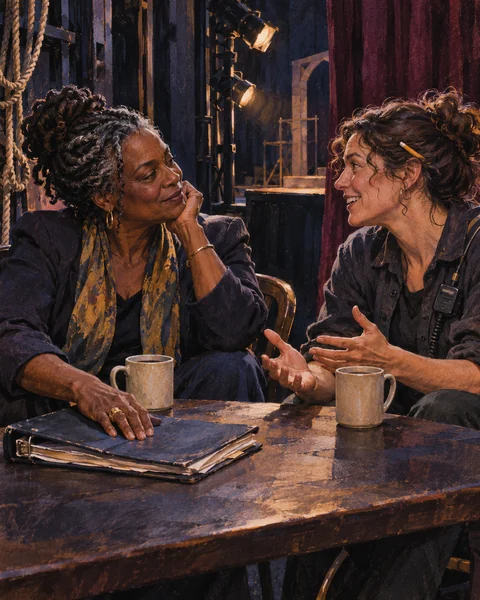
Everyone waits for their decision. They miss a conversation without that pause.
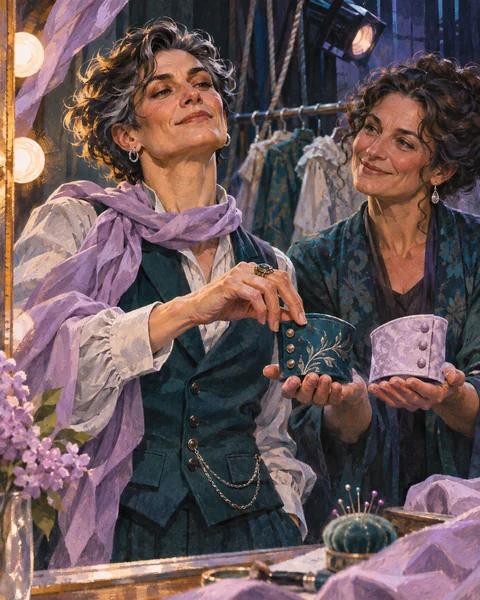
They change a costume's expected silhouette and ask to be seen without the old script.
The detail that changes the reading
One everyday situation, read two ways. These five comparisons are individually written to make the dividing detail visible.
The remembered detail performs a different task: recognition of a personal ideal, or tact that restores ease in the current interaction.
The Siren reading depends more on sensory access; the Star reading depends more on the gaps that let an observer project beyond what they saw.
The changing availability of attention distinguishes the Coquette reading from the Rake's concentrated declaration. A sequence is needed to see it.
A challenge to categorization is different from an incomplete image that invites projection. An unusual garment can contribute to either.
The Natural opens another way to participate; the Charmer responds more directly to how someone is being received.
Characters, evidence and the process
The distinctions and process links below are our editorial readings. Each documented comparison has its own source trail.
The Seducer's Victims
A desired imagined life becomes a more particular projection when another person is asked to embody an imagined elsewhere.
Compare The Exotic Fetishist and The Disappointed DreamerAn imagined elsewhere can supply a larger picture that obscures a speaking person's ordinary life. Verification and correction change that picture.
These are reading themes, not dimensions on which people are scored.
How much of the person is encountered, and how much is imagined?
What is noticed, and what does that attention leave outside its frame?
Who defines the part a person is being asked to play?
Is the attraction discovery, difficulty, freshness or a wished-for return?
What becomes clear or uncertain as an encounter continues?
Who defines a need, and who retains the ability to change the arrangement?
Can an admired purpose contain a practical question or a disagreement?
Which way of attending to an experience is being invited?
An evidence trail for each reading
Our editors chose these examples and counterexamples. Sharing a document does not mean assigning its subject a permanent role.
The city's account places Baker's Paris stage debut in 1925 and identifies J'ai deux amours with her first Casino de Paris recital in 1930.
Bonaparte describes thinking constantly of Josephine while working, then interprets the interval and formality of her replies as signs of cooled affection.
The custodial account connects Orlando to Vita Sackville-West and the ancestral home she could not inherit; Woolf gave Vita the original manuscript on 6 December 1928.
The photograph presents Duchamp as Rrose Sélavy; the museum describes a collaboration with Man Ray that challenges gender conventions.
Calder made and performed a miniature circus. Audiences sat on beds or crates, ate peanuts and used noisemakers while he directed and narrated the acts.
Darwin tells Emma that he has arranged for fires to be lit on Tuesday or Wednesday, leaving the arrival decision to her after describing her influence on his travel plans.
Maathai links tree planting to rural women's stated needs and connects the work with democratic participation and peace in her Nobel lecture.
The committee describes a grassroots tree-planting movement whose scope included democracy, women's rights and international solidarity.
The curator describes Monroe's 1959 collaboration with Halsman, her initially reluctant then varied jumps, and the selection of a variant for a LIFE cover.
Monroe reviewed and pencilled changes to Meryman's transcript and asked that the published interview take her beliefs seriously.
Casanova, later librarian at Dux, began writing his French memoir in 1789; the surviving manuscript is a revised construction of his remembered life.
Austen reconsidered her advice about a possible marriage and explicitly returned the decision to her adult niece Fanny.
Marie-Antoinette sought respite from court etiquette at the Petit Trianon and commissioned a garden, hamlet and theatre.
Addams chaired the Hague women's peace meeting, sought mediation and faced condemnation for opposing American entry into war.
Garland and manager Freddie Fields deliberately focused the Carnegie Hall concert on voice and orchestra rather than elaborate visual business.
At 72 Delany developed botanical paper-mosaicks made from numerous cut pieces, working from plant specimens.
Earhart's 1932 solo nonstop Atlantic flight made her the first woman to accomplish it; she advocated for women's opportunities in aviation and other careers.
The exhibition interprets Gauguin's representation of elsewhere as an invented mythology rather than transparent documentation.
Kahlo inscribed two clocks to mark separation/divorce in 1939 and remarriage to Rivera in December 1940.
Perry used the childhood teddy Alan Measles as an adult artistic character in a ceramic narrative about the pandemic.
Nightingale used mortality analysis and diagrams to argue for reform, then supported cleaner hospitals and the training of nurses.
The catalogue describes a roughly 50,000-word letter/essay written by Wilde to Lord Alfred Douglas from Reading Gaol and its later edited publication.
Lovelace translated Menabrea's description of Babbage's Analytical Engine and added notes extending the discussion to applications beyond arithmetic.
O'Keeffe chose a ruined house for its courtyard and garden, supervised restoration and furnished an environment suited to her work.
Victoria decided to marry Albert and, as royal protocol required, made the proposal herself on 15 October 1839.
As adults, Cahun chose a gender-neutral name and collaborated with Marcel Moore on the 1919 illustrated reissue of Vues et Visions.
The taxonomy was checked in The Art of Seduction, Penguin Books, 2003, ISBN 9780142001196, first published by Viking in 2001. The nine seductive characters and eighteen receiving-side headings remain separate; the combined Reformed Rake or Siren heading counts once. The Anti-Seducer is outside both sets.
Copyright page: PDF index 5. The Seducer's Victims—The Eighteen Types: chapter opening printed p.147; Victim Theory p.149; eighteen headings and discussion pp.150–160, PDF indices 177–187.
Robert Greene; publisher record by Penguin Books · 2003-10-07 paperback edition
Locate: Publication details; Table of Contents, Part One: The Seductive Character, nine headings before The Anti-Seducer
Supports: The nine seductive-character headings occur in the order Siren, Rake, Ideal Lover, Dandy, Natural, Coquette, Charmer, Charismatic and Star. The Anti-Seducer is separate.
Scope: The contents verify names, order and the publisher's brief propositions. They do not verify the independent historical cases or imply scientific personality categories.
Ville de Paris · Updated 2025-03-05
Locate: Opening account of her 2 October 1925 debut; section Au Casino de Paris, Joséphine chante ses deux amours
Supports: The city's account places Baker's Paris stage debut in 1925 and identifies J'ai deux amours with her first Casino de Paris recital in 1930.
Scope: An institutional history records performances and repertoire, not every audience member's desire or Baker's complete private intentions.
Napoleon Bonaparte; translated and presented by Fondation Napoléon · 1796-03-30
Locate: The translated letter: concentrated longing amid military work; response to Josephine's formal address and the interval between her letters
Supports: Bonaparte describes thinking constantly of Josephine while working, then interprets the interval and formality of her replies as signs of cooled affection.
Scope: His letter directly records his rhetoric and interpretation. It cannot establish why Josephine wrote as she did or prove that she deliberately managed his desire.
National Trust · 2024-12-02
Locate: Opening account of Vita, Knole and inheritance; the gift of the original manuscript on 6 December 1928
Supports: The custodial account connects Orlando to Vita Sackville-West and the ancestral home she could not inherit; Woolf gave Vita the original manuscript on 6 December 1928.
Scope: A novel can offer an imaginative counterpart to a loss without replacing the real property or establishing a complete account of either woman's motives.
Man Ray; collection interpretation by Philadelphia Museum of Art · c. 1920–1921
Locate: Object description: feminine alter ego, clothing, name wordplay and collaboration challenging gender conventions
Supports: The photograph presents Duchamp as Rrose Sélavy; the museum describes a collaboration with Man Ray that challenges gender conventions.
Scope: An artistic presentation is not a diagnosis of gender identity, a claim about sexuality or evidence that gender nonconformity predicts a seductive intention.
Alexander Calder; custodial interpretation by Whitney Museum of American Art · 1926–1931; collection record undated
Locate: Opening collection description, especially audience seating, peanuts, noisemakers and Calder's narration
Supports: Calder made and performed a miniature circus. Audiences sat on beds or crates, ate peanuts and used noisemakers while he directed and narrated the acts.
Scope: A deliberately made playful performance does not demonstrate a childlike permanent personality or a universal response in its audience.
Charles Darwin; edited by the Darwin Correspondence Project · 1839-01-26
Locate: Letter DCP-LETT-493, first substantive paragraph: plans after the wedding and fires prepared for either arrival day
Supports: Darwin tells Emma that he has arranged for fires to be lit on Tuesday or Wednesday, leaving the arrival decision to her after describing her influence on his travel plans.
Scope: The letter records a particular arrangement in Darwin's own words. It does not establish the recipient's whole experience of the marriage or equality throughout it.
Wangari Maathai · 2004-12-10
Locate: Passages beginning In 1977 and Tree planting became a natural choice; later linkage of trees, democratic action and peace
Supports: Maathai links tree planting to rural women's stated needs and connects the work with democratic participation and peace in her Nobel lecture.
Scope: The speech establishes the argument she presented, not every listener's reaction. The comparison concerns public conviction and participation, not romantic access. The original Nobel host returned 403 during research; the credited reproduction was readable.
Norwegian Nobel Committee · 2004 prize; biographical record undated
Locate: Sustainable Development, Democracy and Peace; paragraphs on the 1977 grassroots campaign and its wider vision
Supports: The committee describes a grassroots tree-planting movement whose scope included democracy, women's rights and international solidarity.
Scope: Institutional recognition does not establish that all supporters followed for the same reason or that a literary character label describes Maathai's entire identity.
Rosie Broadley, as presented by the National Portrait Gallery · 2026-05-28
Locate: Philippe Halsman's 1959 studio photograph and the account of alternative jumps, dresses and a LIFE cover variant
Supports: The curator describes Monroe's 1959 collaboration with Halsman, her initially reluctant then varied jumps, and the selection of a variant for a LIFE cover.
Scope: The resulting public image is a selection made through professional collaboration. It does not reveal the whole person or grant viewers personal access.
Bibliothèque nationale de France · Undated page; exhibition 12 September 2025–4 January 2026
Locate: Opening paragraph and « Un Voyage dans le temps, au XVIIIe siècle »
Supports: Casanova, later librarian at Dux, began writing his French memoir in 1789; the surviving manuscript is a revised construction of his remembered life.
Scope: The custodial account and memoir do not establish that a former libertine necessarily wants to resume past relationships.
Jane Austen; edited by Lord Brabourne · Letters of 18 and 30 November 1814; published edition 1884
Locate: Letters LXXX and LXXXI, especially LXXXI's advice that Fanny's own feelings should determine her decision
Supports: Austen reconsidered her advice about a possible marriage and explicitly returned the decision to her adult niece Fanny.
Scope: An edited transcription preserves Austen's words, not Fanny's entire experience or the suitor's motives.
Palace of Versailles · Undated estate history
Locate: Opening estate description and Marie-Antoinette/Petit Trianon sections
Supports: Marie-Antoinette sought respite from court etiquette at the Petit Trianon and commissioned a garden, hamlet and theatre.
Scope: The history establishes choices about a retreat, not a diagnosis of spoiled dependency or a romantic preference.
Norwegian Nobel Institute · Undated laureate history; award 1931
Locate: Jane Addams paragraphs, especially opposition to American entry into the First World War
Supports: Addams chaired the Hague women's peace meeting, sought mediation and faced condemnation for opposing American entry into war.
Scope: This institutional account supports public conviction and opposition; it cannot prove any private desire to violate her principles.
Cary O'Dell · Recording 23 April 1961; registry essay undated
Locate: PDF pages 1–2; paragraph describing Garland and Freddie Fields's staging decisions
Supports: Garland and manager Freddie Fields deliberately focused the Carnegie Hall concert on voice and orchestra rather than elaborate visual business.
Scope: A retrospective recording essay documents performance choices and reception, not a private need for flattery. Do not repeat its erroneous concert-age statement.
The Metropolitan Museum of Art · Object circa 1772–1782; collection record undated
Locate: Object description; accession 25.19.45
Supports: At 72 Delany developed botanical paper-mosaicks made from numerous cut pieces, working from plant specimens.
Scope: Beginning a new art form late in adulthood does not demonstrate general innocence or a need for initiation by another person.
Library of Congress · Guide updated 28 May 2026
Locate: Introduction, opening biographical paragraphs
Supports: Earhart's 1932 solo nonstop Atlantic flight made her the first woman to accomplish it; she advocated for women's opportunities in aviation and other careers.
Scope: A chosen aviation challenge is not evidence that she treated people as conquests or preferred romantic resistance.
National Gallery of Art · Exhibition 27 February–5 June 2011
Locate: PDF page 2, opening curatorial essay on imagined paradise and mythmaking
Supports: The exhibition interprets Gauguin's representation of elsewhere as an invented mythology rather than transparent documentation.
Scope: Curatorial interpretation of representation cannot speak for the people represented or establish a universal attraction to another race or culture.
Museo Frida Kahlo · Undated chronology; entries 1939–1940
Locate: 1939 divorce entry, Pair of clocks; 8 December 1940 remarriage entry
Supports: Kahlo inscribed two clocks to mark separation/divorce in 1939 and remarriage to Rivera in December 1940.
Scope: The museum records dates and objects. It does not establish that Kahlo wanted suffering or consented to mistreatment.
National Portrait Gallery; Richard Meryman interview material · Exhibition guide 2026; interview July 1962, published 3 August 1962
Locate: PDF pages 102–103 (zero-based 101–102), edited transcript and Life magazine labels
Supports: Monroe reviewed and pencilled changes to Meryman's transcript and asked that the published interview take her beliefs seriously.
Scope: The exhibition labels document editorial participation, not a general account of her private relationships or psychological needs.
Roger Highfield interviewing Grayson Perry · 30 March 2022
Locate: Interview questions on the fantasy narrative and Alan Measles; acquisition paragraph
Supports: Perry used the childhood teddy Alan Measles as an adult artistic character in a ceramic narrative about the pandemic.
Scope: An artist's explanation of a work cannot establish clinical regression, irresponsibility or a romantic dependency.
National Army Museum · Undated museum history
Locate: Statistics and Nightingale Training School sections
Supports: Nightingale used mortality analysis and diagrams to argue for reform, then supported cleaner hospitals and the training of nurses.
Scope: Institutional history supports her reform work, not an inference that she required patients to remain dependent.
British Library catalogue editors; Oscar Wilde manuscript material · Letter 1897; papers 1895–1913 and undated
Locate: Catalogue record 038-001987373, title/description and component Add MS 81645 [1897]
Supports: The catalogue describes a roughly 50,000-word letter/essay written by Wilde to Lord Alfred Douglas from Reading Gaol and its later edited publication.
Scope: This catalogue establishes the document and its form, not every motive, accusation or emotion contained within it.
Science Museum Group · Undated biographical collection record
Locate: Biography, translation of Menabrea and appended Notes
Supports: Lovelace translated Menabrea's description of Babbage's Analytical Engine and added notes extending the discussion to applications beyond arithmetic.
Scope: Collaboration and intellectual admiration are documented; total personal submission or an inner emotional void is not.
Georgia O'Keeffe Museum · Undated museum history; purchase 1945, permanent move 1949
Locate: Abiquiú Home and Studio description, purchase/restoration paragraphs and garden note
Supports: O'Keeffe chose a ruined house for its courtyard and garden, supervised restoration and furnished an environment suited to her work.
Scope: An account of active aesthetic choices does not establish passive receptivity or a preference in romantic partners.
Historic Royal Palaces · Undated history; proposal 15 October 1839
Locate: Victoria and Albert — Prince Albert and the proposal
Supports: Victoria decided to marry Albert and, as royal protocol required, made the proposal herself on 15 October 1839.
Scope: The episode documents her initiative within convention; a sovereign's rank alone cannot establish loneliness or susceptibility.
Jersey Heritage · Undated collection history; adult name/publication choices 1918–1919
Locate: Opening history, chosen name in 1918 and Vues et Visions collaboration in 1919
Supports: As adults, Cahun chose a gender-neutral name and collaborated with Marcel Moore on the 1919 illustrated reissue of Vues et Visions.
Scope: Authored self-presentation and collaboration do not establish a deficit, sexual availability or a predictable response to seduction. Greene's heading is not a modern identity category.
Robert Greene; produced by Joost Elffers · 2003 paperback; first published 2001
Locate: Copyright page: PDF index 5. The Seducer's Victims—The Eighteen Types: chapter opening printed p.147; Victim Theory p.149; eighteen headings and discussion pp.150–160, PDF indices 177–187.
Supports: The nine seductive characters and eighteen receiving-side headings are separate sets, in book order. The Reformed Rake or Siren is one combined heading. The Anti-Seducer is outside both sets.
Scope: This is a literary taxonomy. Documentary comparisons in the atlas are selected by our editors, not claims that the people permanently belong to a type.